Access to AI cannot stay limited to a handful of classrooms, and pilot programs alone are not enough. Dr. Kollin Napier, Ph.D., Director of the Mississippi Artificial Intelligence Network (MAIN), joined a panel at NVIDIA GTC 2026 titled “AI Literacy at Scale: K-to-Career Access That Delivers Real Student Outcomes.” That session is now available to watch on demand. In it, Dr. Napier represented Mississippi and contributed the state’s coordinated statewide perspective to a national conversation on expanding AI access across education and the workforce.
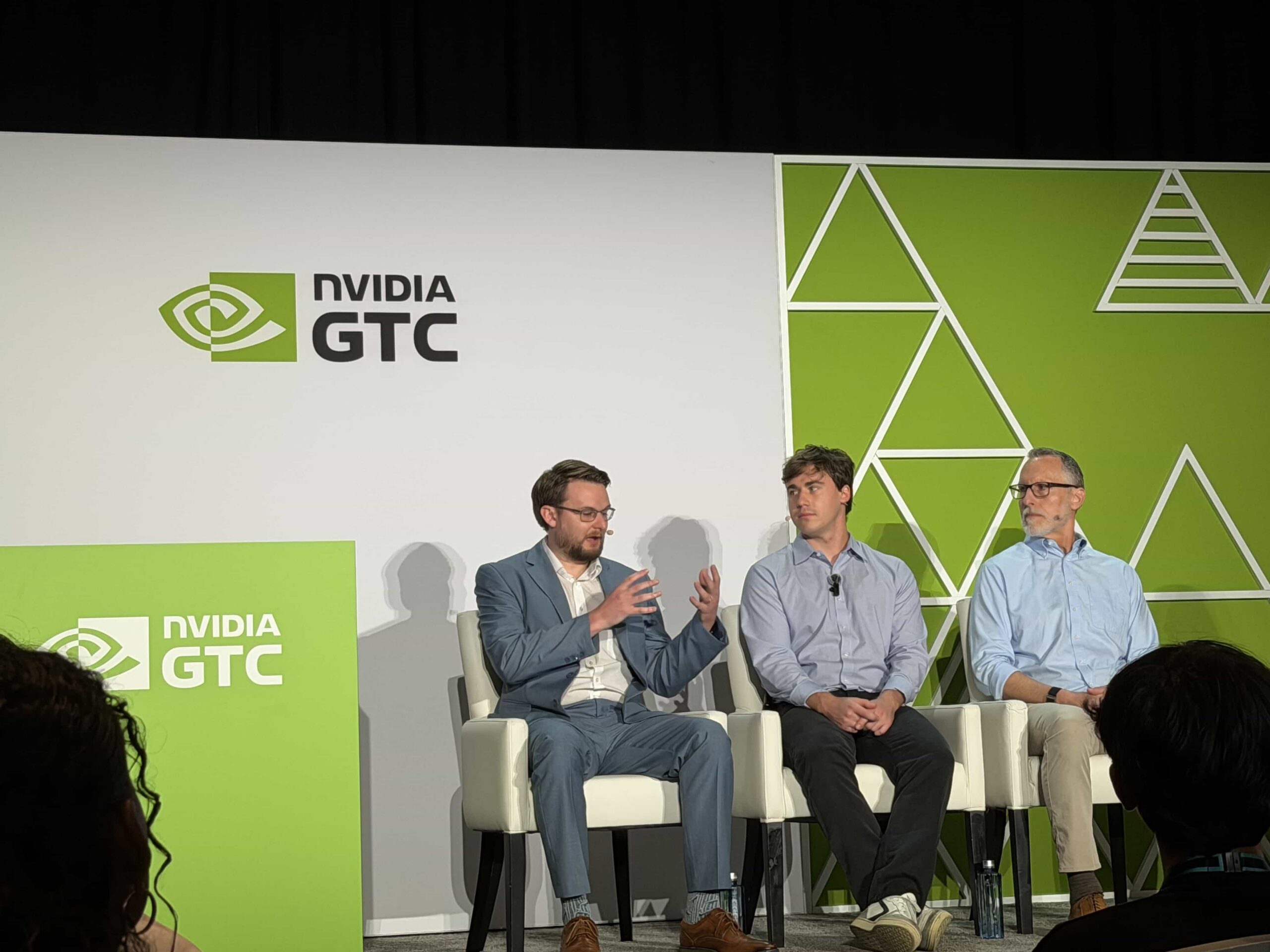
Watch MAIN at NVIDIA GTC: The Full Panel On Demand
The full session is now available on NVIDIA’s on-demand platform. It is free to access and easy to share. Whether you missed the live event or want to revisit the discussion, this session delivers practical insight. Specifically, it covers what it takes to build AI literacy that reaches students and workers at every stage, from early K-12 classrooms through career entry and advancement.
What the Session Covers: Real Outcomes, Not Just Access
The panel moved well beyond the question of whether students should have access to AI. Instead, it focused on how to make that access meaningful. In addition, the discussion addressed what it takes to turn AI exposure into genuine workforce readiness:
- Scaling beyond pilots: Moving from isolated experiments to coordinated, system-wide implementation.
- K-to-career pathways: Building AI literacy continuously from early education through workforce entry.
- Real student outcomes: Measuring success by what students can actually do with AI, not just whether they have access.
- Equitable reach: Expanding access across geography, income level, and background.
These are precisely the challenges MAIN is addressing in Mississippi. As a result, Dr. Napier was well positioned to bring a grounded, real-world perspective to the national stage. For related context, see our earlier post on Mississippi’s MAIN initiative at NVIDIA GTC and our overview of AI capacity building across Mississippi’s workforce.
“AI literacy cannot stay limited to a few classrooms or pilot programs. That is the same kind of work we are advancing through MAIN as we build practical AI access across K-12, higher education, workforce, industry, and government.”
, Mississippi Artificial Intelligence Network (MAIN)
MAIN: Mississippi’s Answer to AI Literacy at Scale
Through MAIN, Mississippi is building a coordinated statewide approach. Consequently, AI literacy functions as a connected system, not a collection of unrelated programs. That system spans five sectors working in active alignment:
- K-12 Education: Age-appropriate AI literacy with responsible-use frameworks embedded from the start.
- Higher Education: AI competencies woven across disciplines to prepare graduates for an AI-integrated economy.
- Workforce Development: Practical upskilling programs aligned to real employer demand across Mississippi.
- Industry: Employer partnerships that keep training pipelines connected to evolving workforce needs.
- Government: Policy coordination and public investment that sustain long-term AI capacity statewide.
This integrated model ensures AI literacy does not stop at the classroom door. Furthermore, it follows students and workers through every stage of their educational and professional lives. That continuity is what makes the difference between a program and a system. The GTC conversations also reinforced that scaling AI takes more than tools. In addition, it takes infrastructure, talent, and partnerships, sustained through long-term coordination across education, industry, and government.
Mississippi at the National Table, and Bringing It Home
Dr. Napier’s participation did more than represent Mississippi. It demonstrated that MAIN’s work belongs in the national conversation. Moreover, every insight and connection from events like GTC feeds directly back into MAIN’s ongoing work across the state. Mississippi is not observing this movement from the outside. On the contrary, it is actively shaping it, and sharing what it learns along the way.
Watch the Session and Share It
The on-demand session is free and worth sharing widely. For instance, educators, administrators, workforce leaders, and policymakers will all find value in the discussion. If you are working to expand AI access in your school or organization, this panel is a strong starting point. Similarly, Mississippi’s experience through MAIN offers a practical, replicable model for other states and institutions to follow.
Learn more about Mississippi’s statewide AI initiative at mainms.org.
Tags: #MAIN #MississippiAI #Mississippi #AI #AILiteracy #AIinEducation #WorkforceDevelopment #NVIDIAGTC #GTC #NVIDIA