
Published June 4, 2026 at 7:00 p.m. CT by the Mississippi Artificial Intelligence Network.
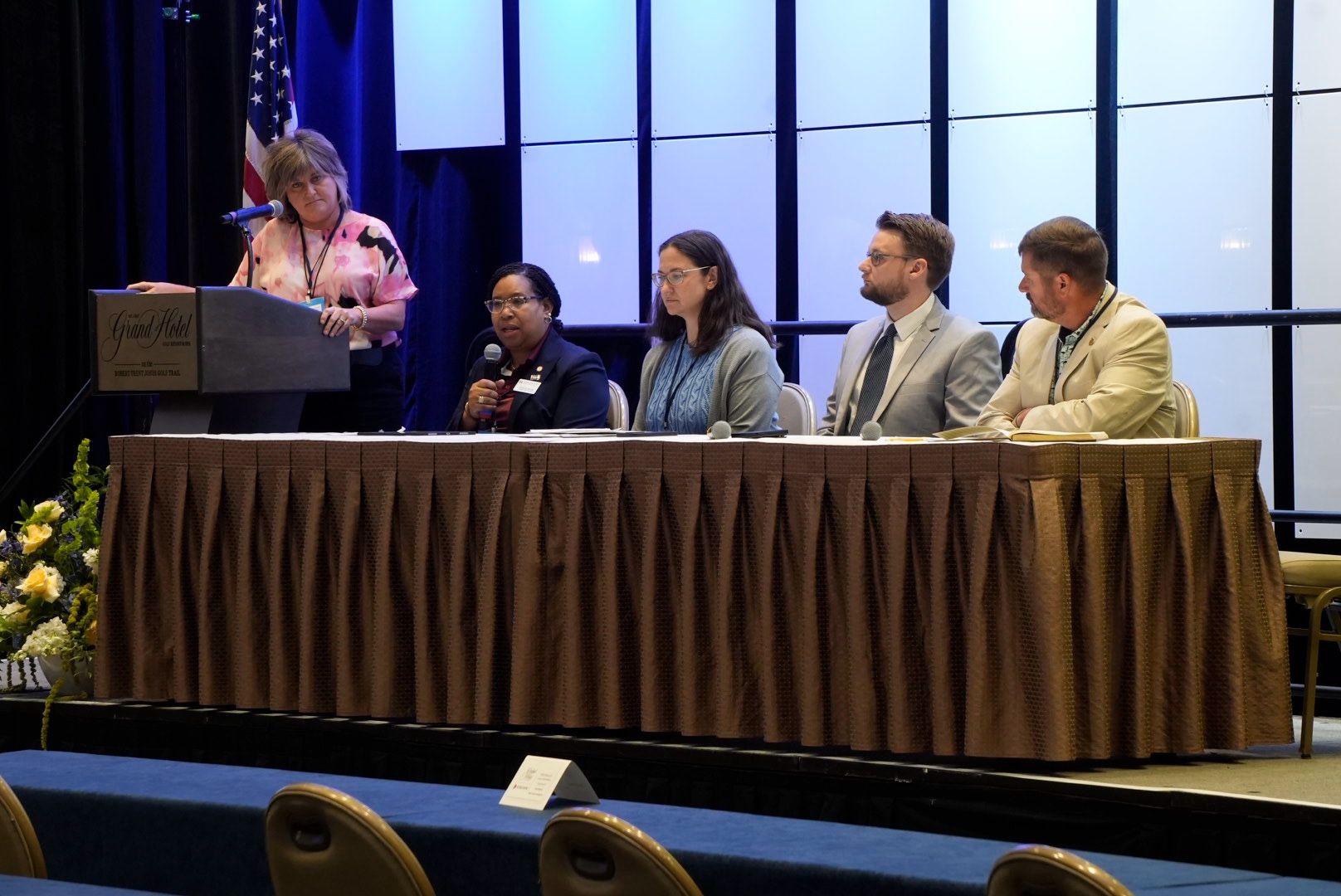
AI in manufacturing took center stage as Dr. Kollin Napier, Director of the Mississippi Artificial Intelligence Network (MAIN), joined leaders from industry, research, and higher education for the panel discussion “Building the Future of Manufacturing with AI and Intelligent Systems” at the Mississippi Business Alliance Manufacturers Council Summit on June 4, 2026. The conversation explored how Mississippi manufacturers can adopt artificial intelligence in practical, workforce-ready ways.
Key details
- What: A panel discussion, “Building the Future of Manufacturing with AI and Intelligent Systems,” on the growing role of AI in manufacturing.
- When: June 4, 2026, at the Mississippi Business Alliance Manufacturers Council Summit.
- Who: Dr. Kollin Napier (MAIN); Dr. Tonya McCall, Center for Advanced Vehicular Systems Extension at Mississippi State University; Dr. Alicia Ruvinsky, Institute for Systems Engineering Research at Mississippi State University; and Gavin Hatcher, Vice President of Manufacturing, Proprietary Products, Hol-Mac Corporation. Moderated by Sandy Crist.
- Where: Mississippi.
- Why it matters: Practical adoption and workforce readiness can help Mississippi manufacturers improve operations, quality, and competitiveness.
AI in manufacturing as a practical business tool
Throughout the session, Dr. Napier framed artificial intelligence as a practical business tool rather than a standalone technology initiative. In other words, the goal is better manufacturing, not technology for its own sake.
“Manufacturers do not need to become AI companies. They need to understand where AI can help them become better manufacturing companies,” said Napier.
As a result, he encouraged manufacturers to begin with operational challenges. For example, panelists pointed to reducing downtime, improving quality, predicting maintenance needs, and helping workers access information more efficiently.
Start with the problem, not the technology
Rather than chasing the newest tool, Napier said successful adoption starts with a clear business problem. Therefore, he encouraged organizations to pilot small, measurable projects that show value while limiting risk. Afterward, those early wins can guide larger investments.
Workforce readiness and early engagement
Napier also stressed that people, not just technology, determine whether adoption succeeds. In particular, he urged manufacturers to involve employees early.
“Technology adoption almost always fails when people are introduced to the tool after the decision has already been made,” Napier said. “When workers understand what AI is, what it is not, and how it can help them, adoption becomes much smoother and much more successful.”
Looking at skills, he highlighted problem-solving, data literacy, and critical thinking. Notably, he added that workers do not need advanced technical degrees to benefit from AI-enabled tools. Instead, they need practical, job-relevant training.
Data readiness and cybersecurity come first
Before manufacturers scale AI, Napier said, they should strengthen their data and security foundations.
“Many organizations want to talk about AI before they talk about data,” Napier said. “In reality, data readiness and cybersecurity are often the foundation. AI can only be as effective as the information and systems that support it.”
A coordinated statewide approach
Finally, Napier pointed to collaboration as Mississippi’s biggest advantage. He noted that manufacturers, community colleges, universities, workforce agencies, economic development organizations, and government partners all have a role to play.
“No single organization can solve this alone,” Napier said. “Mississippi’s opportunity lies in building a coordinated pipeline of AI awareness, training, talent, and adoption that supports manufacturers and workers across the state.”
About MAIN
MAIN is Mississippi’s statewide AI initiative. Working with partners across education, workforce development, government, and industry, MAIN expands AI literacy, strengthens workforce readiness, and supports responsible AI adoption throughout Mississippi.
Related resources
- Use the Manufacturing AI Playbook to plan a controlled pilot, review tools and data, train teams, and measure results.
- Try our beginner ChatGPT prompts for manufacturing
- Learn about the AI Workforce Readiness Council
- Build skills with MAIN’s free AI courses
- About MAIN and how to get involved