
The Mississippi Artificial Intelligence Network (MAIN) published AI Cyber Safety on October 5, 2026, giving people practical steps for protecting information, checking requests, and reviewing AI access and actions at work, school, and home.
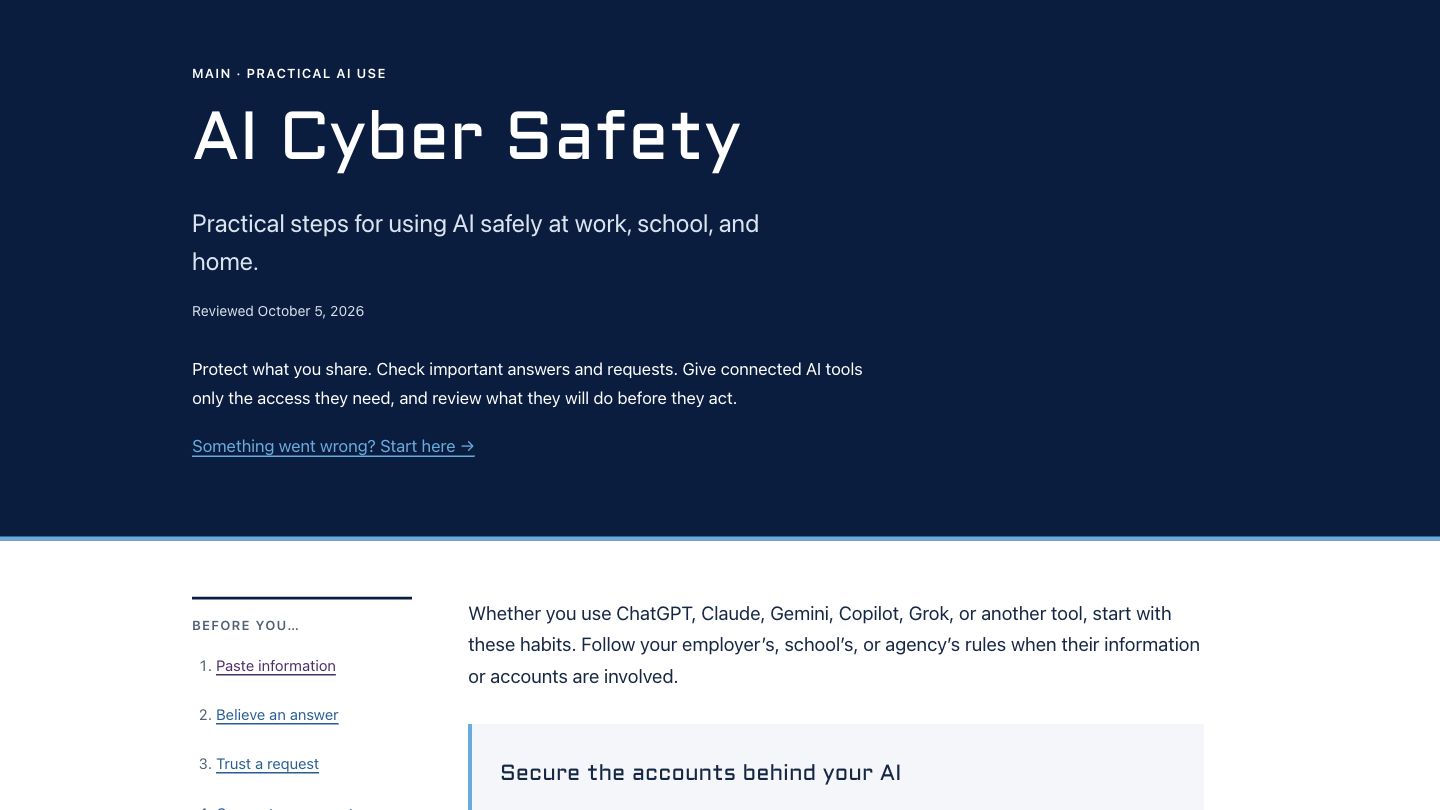
The guide is written for everyday AI users, including residents, employees, educators, parents, students, and small-business users. It brings together decisions that arise while using tools such as ChatGPT, Claude, Gemini, Copilot, and Grok, with sections readers can choose according to the task in front of them.
One example is connecting AI to email or cloud files. The guide asks readers to check which account is selected, what the tool can read or change, and how to revoke access. Read-only access can still expose private information. For work or school accounts, users should follow their organization’s approval rules.
Other sections cover information that should stay out of chats, checking consequential answers against original sources, verifying suspicious requests through a trusted independent channel, and reviewing commands or software before running them. A short response section explains how to stop a suspicious interaction, contain account access, preserve evidence, and contact the appropriate organization or reporting service.
AI Cyber Safety complements MAIN’s Cybersecurity AI Playbook for organizational security work and Student AI Playbook for educational use. The permanent guide also links to supporting guidance from the FBI, Federal Trade Commission, National Institute of Standards and Technology, National Cybersecurity Alliance, and AI providers.
Read AI Cyber Safety, or open MAIN Resources and select “Use AI safely.”