
Dr. Kollin Napier joined the GME and Workforce Summit in Madison on October 17 to discuss how physicians and medical learners can put AI to work, evaluate its results and recognize when a tool needs closer review.
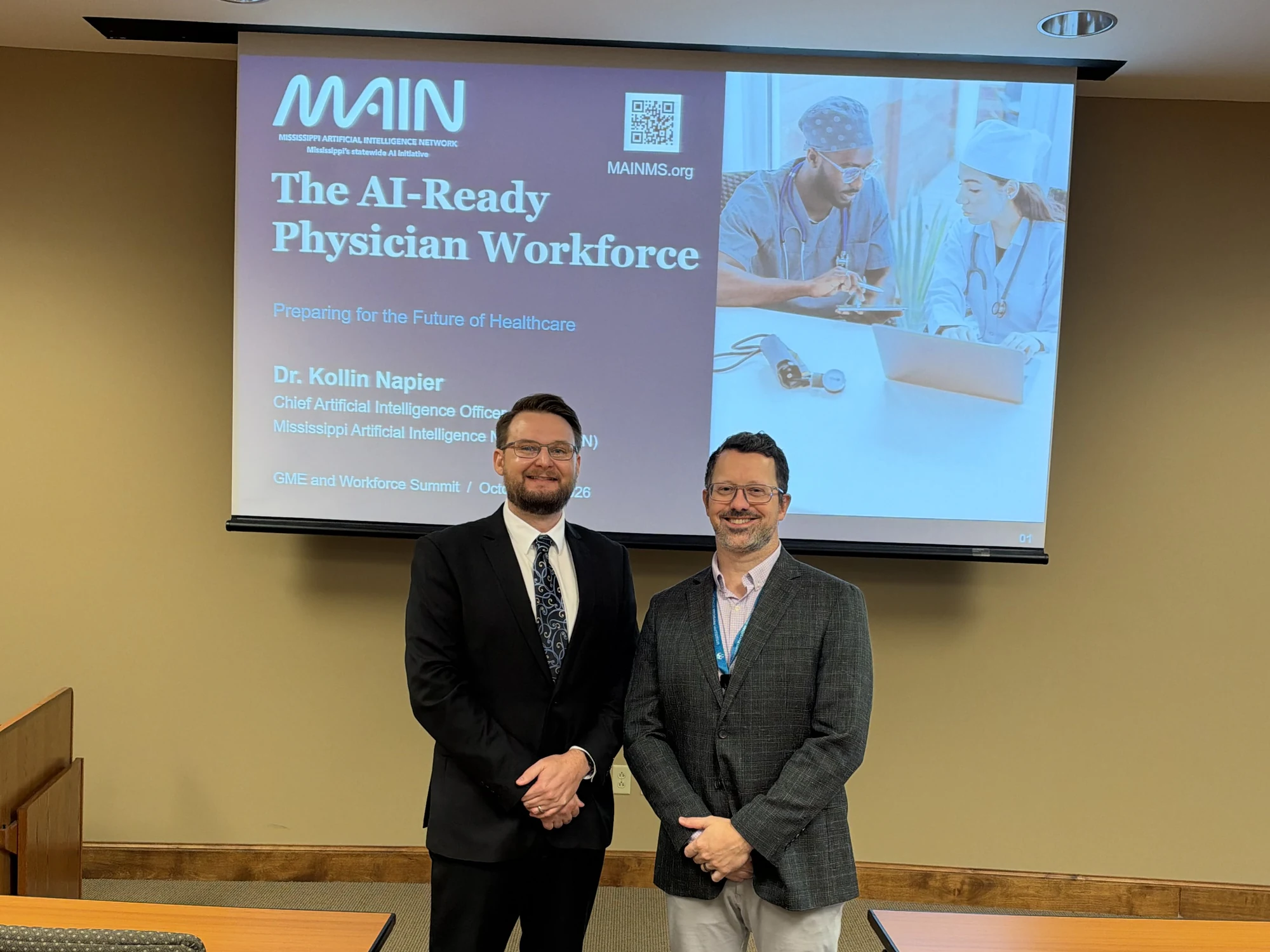
Napier, Chief Artificial Intelligence Officer for the Mississippi Artificial Intelligence Network (MAIN), Mississippi’s statewide AI initiative, presented “The AI-Ready Physician Workforce.” Dr. Richard Calderone and the Office of Mississippi Physician Workforce at the Mississippi State Department of Health invited MAIN to contribute to the summit’s focus on physician education, recruitment and retention.
AI in the workday and the classroom
The presentation explored everyday applications, including AI-assisted clinical notes, feedback for medical learners and drafts of physician recruitment outreach. Napier discussed how those uses could reduce administrative work or support learning, while keeping the finished work subject to review.
Documentation was one example of why the whole workflow matters. Time spent correcting a note belongs in an assessment of whether a tool saves time. The session also separated evidence about documentation burden and clinician well-being from the unanswered question of whether those benefits improve physician retention.
For medical education, Napier proposed giving learners practice making their own assessment, checking original sources and explaining why they would accept or change an AI recommendation. The discussion also addressed AI support in mammography screening and why performance in another setting does not establish that a system will work for local patients.
A fictional case puts decisions in context
A staged discharge case showed how missing information and excessive system permissions can undermine care. In the fictional scenario, an AI draft recommended a medication before a serious allergy had been reconciled. A missing outside record and permission to send an unreviewed plan allowed the message to reach the patient.
The exercise examined what the clinical team should verify and what the organization needed to fix. Reviewing the patient’s history was part of the answer; repairing the connection to outside records and limiting the system’s ability to send messages were also necessary. The case did not describe an actual patient event.
The broader discussion covered patient privacy and recording choices, approved tools, and the difference between allowing an AI agent to read information, draft content or take an action. Napier also compared patient-facing AI, clinician tools and medical models, connecting tool selection with the task, patient population and information involved.
Resources for healthcare teams
Napier shared MAIN’s healthcare prompting guides, healthcare policy planning template and Faculty AI Playbook. These resources offer starting points for local discussion and practice; they do not replace institutional policies or professional review.
MAIN also offers free, online, self-paced AI training for Mississippi participants, including AI in Healthcare. That course includes practice with fictional healthcare documents and protecting patient information. Enrollment is open through June 30, 2027, subject to seat and license availability.
MAIN thanks Calderone and the Office of Mississippi Physician Workforce team for the invitation and for organizing a program focused on the people who train, recruit and support Mississippi’s physicians.