
Published August 21, 2026 at 8:00 p.m. CT by the Mississippi Artificial Intelligence Network.
FLOWOOD, Miss. — Mississippi has more than $61 billion in announced or planned data-center investment across four major initiatives. At the 2026 enHance Annual Workshop and Awards Luncheon on August 21, Mississippi Artificial Intelligence Network (MAIN) Chief Artificial Intelligence Officer Dr. Kollin Napier asked what Mississippi will build around that investment—and what value will remain after construction is complete.
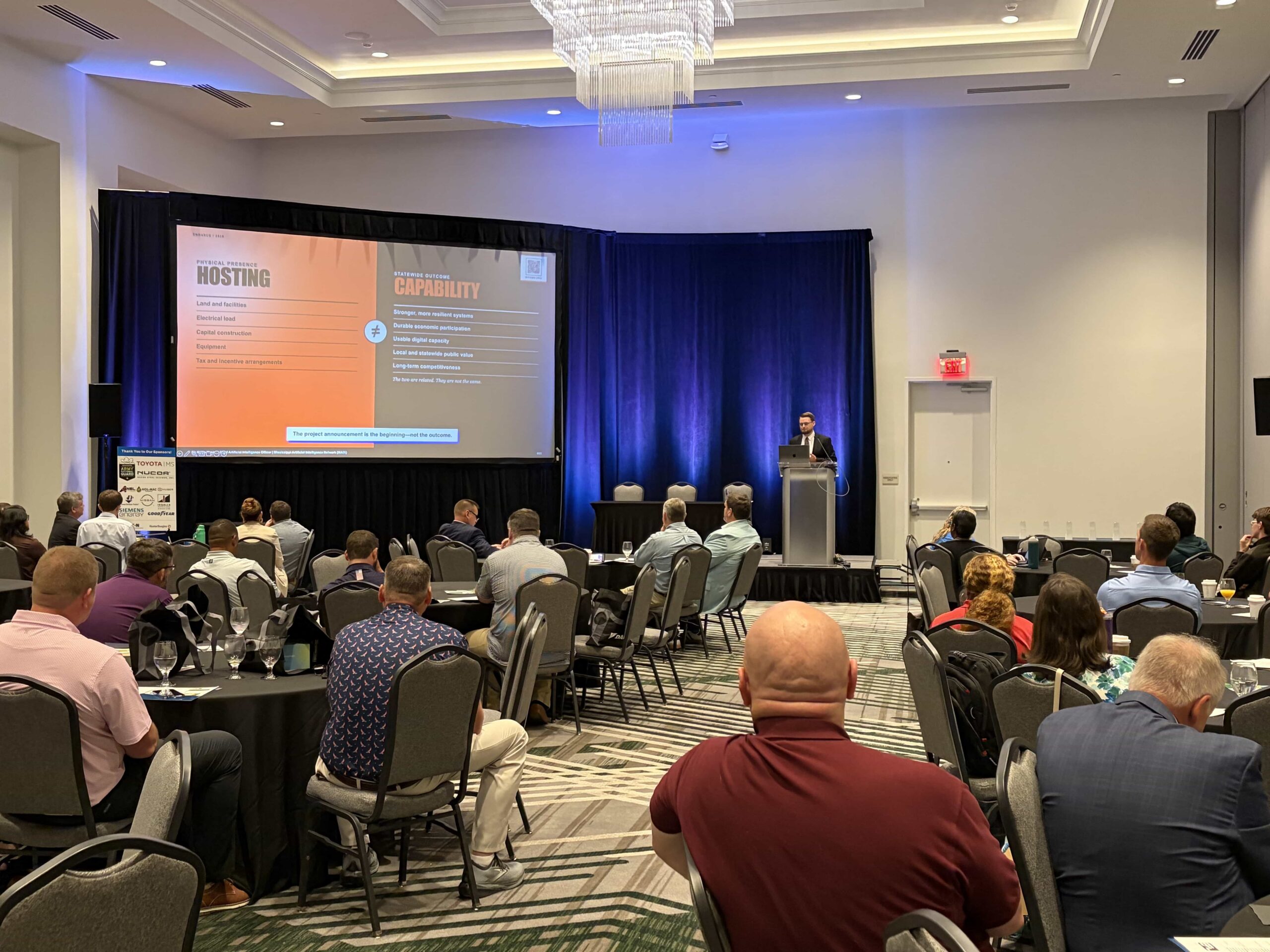
Napier’s keynote, “AI, Infrastructure, and Mississippi’s Future: Innovation, Stewardship, and Responsible Growth,” examined the physical systems behind artificial intelligence: electricity, water, cooling, land, fiber, equipment and the communities that support them.
“The question is not whether AI infrastructure will grow. The question is whether Mississippi will shape that growth deliberately,” Napier said.
What the enHance keynote said about AI infrastructure in Mississippi
Napier placed Mississippi’s current data-center announcements in context. The total includes more than $20 billion announced for xAI in Southaven, $25 billion across multiple planned Amazon projects, $10 billion for Compass Datacenters in Lauderdale County and $6 billion for AVAIO Digital in Rankin County.
He also emphasized the qualifications behind those figures. Announced investment is not the same as money already spent. Amazon’s figure covers multiple planned projects. The Compass total includes information-technology equipment expected from future tenants. The projects are data centers broadly and are not necessarily facilities used only for AI.
Those distinctions do not diminish the scale of the investment. They identify the planning questions that accompany it: how utilities will serve new loads, what infrastructure must be built, how cooling and water decisions fit each location, how costs and risks are allocated, and how communities prepare for long-term operations.
Three tests for responsible AI infrastructure growth
Napier offered three questions Mississippi decision-makers, utilities, communities, educational institutions and industry can use to keep the outcome visible. He described them as strategic tests rather than a replacement for permitting, utility review, engineering or local decision-making.
- Does it fit the place? Project design, resource use, operating demand and risk should be evaluated against the specific location and community.
- Does it strengthen the systems? New demand should help build the capacity, resilience, efficiency, flexibility and transparency required to serve it responsibly.
- Does it benefit Mississippi? The state should examine what durable capability remains after construction, incentives and equipment purchases.
The tests focus attention on the difference between hosting infrastructure and building statewide capability. A facility creates a physical presence. Lasting value requires deliberate choices that strengthen supporting systems, expand local knowledge and skills, involve Mississippi companies and institutions, and prepare communities for what comes next.
Why project-specific evidence matters for power, water and cooling
There is no single environmental profile for every data center or AI workload. Napier cited Lawrence Berkeley National Laboratory research that found more than a 10,000-fold variation in workload-level water use across different technical and geographic conditions. Hardware, workload, utilization, cooling design, climate, power source and time of operation can all affect the result.
For that reason, the useful questions are specific: What will a facility use, when will it use it, where will the resource come from, what happens under peak conditions, which alternatives were evaluated, and what will be measured and reported after operations begin?
Planning must also account for timing. Software and data-center demand can change faster than generation, transmission, substations, water systems, roads, fiber and public services can be expanded. Several projects drawing on the same regional systems may create a different planning picture than any one project viewed alone.
Smarter Stewardship panel connected infrastructure to practical AI adoption
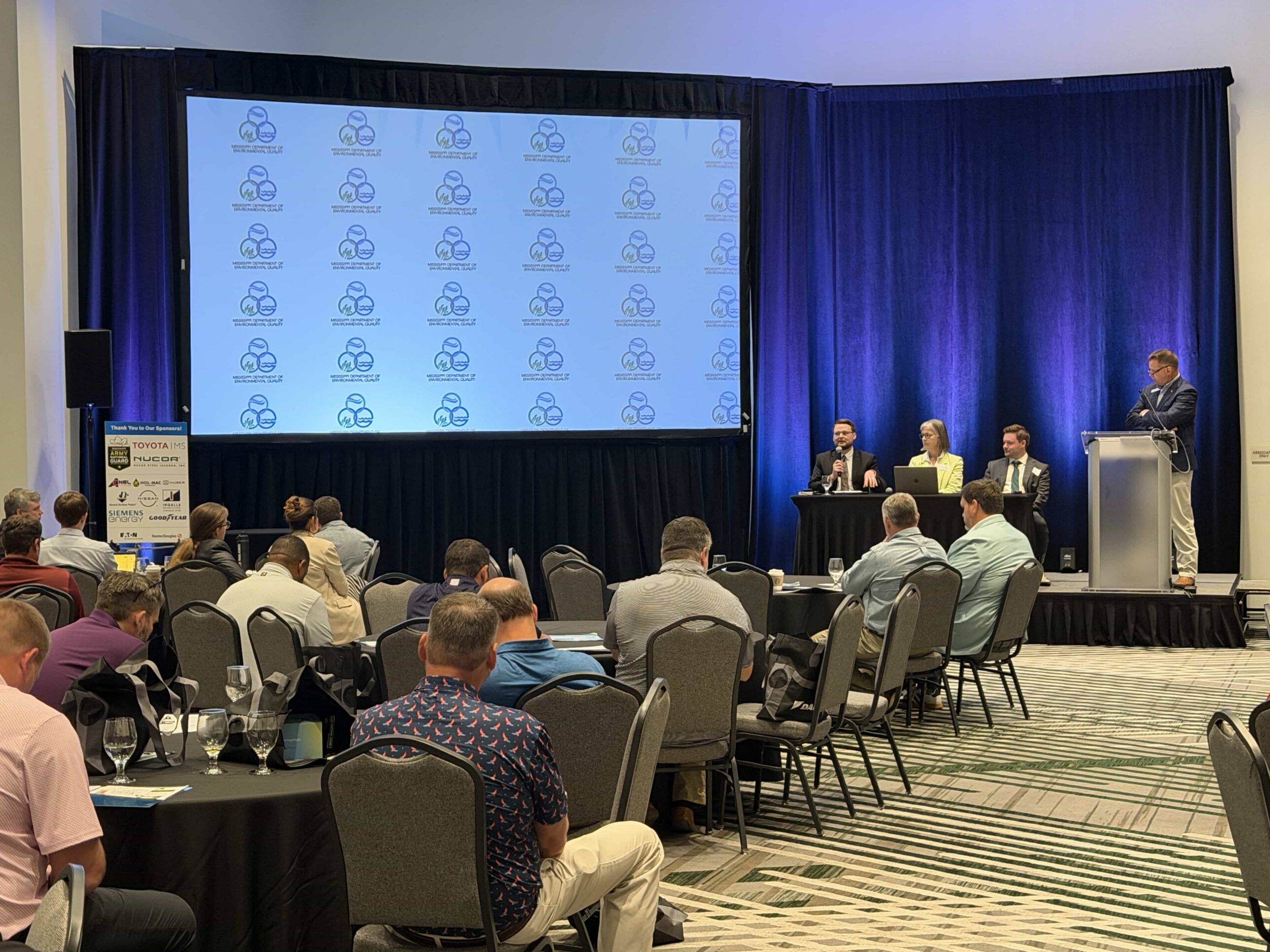
After the keynote, Napier joined John Brugge, Director of Sustainability at the University of Mississippi, and Dr. Julie Jordan, Senior Advisor for AI and Data Governance at Mississippi State University, for “Smarter Stewardship: Practical AI Use Cases for Environmental and Operational Improvement.”
The panel moved from statewide infrastructure to organizational practice. The speakers discussed how agencies, businesses and institutions can begin using AI responsibly, move beyond isolated pilots, prepare employees, work with universities and keep people accountable for decisions.
A practical starting point is one bounded, high-value, low-risk workflow. The organization should define the problem, establish a baseline, assign an accountable owner and set rules for data, security, human review and escalation before the pilot begins. It can then measure whether the tool improves time, quality, cost or service without creating unacceptable risk.
Employees also need AI literacy and judgment, data and process fluency, and deep domain expertise. In technical, environmental and operational roles, AI-generated output must still be tested against standards, measurements, safety requirements and field conditions.
What Mississippi organizations can do next
MAIN helps Mississippi organizations move from interest to responsible action through no-cost training, policy guidance, practical tools, speakers and implementation support.
- Learn: Review MAIN’s no-cost online AI course options.
- Govern: Use MAIN’s policy guidance and practical AI resources.
- Apply: Explore speakers, training and implementation support for Mississippi organizations.
Organizations with a specific operating challenge can also contact MAIN to discuss the next step.
Key takeaways from enHance 2026
- Mississippi has more than $61 billion in announced or planned data-center investment across four major initiatives, but announced investment should not be treated as money already spent.
- AI infrastructure depends on physical systems, including electricity, cooling, water, land, fiber, equipment and public services.
- Responsible growth should fit the place, strengthen the systems it depends on and create durable value for Mississippi.
- Power, water and cooling impacts require verified, project-specific evidence rather than a generic assumption about all data centers.
- Organizations can begin responsible AI adoption with a bounded workflow, a clear owner, safeguards and a measurable outcome.
About the 2026 enHance workshop
The Mississippi Department of Environmental Quality held the 2026 enHance Annual Workshop and Awards Luncheon, “Smart Sustainability: Stewarding AI to Achieve Environmental Excellence,” on Friday, August 21, at The Sheraton Flowood – The Refuge Hotel and Conference Center in Flowood, Mississippi.
Frequently asked questions
What was Dr. Kollin Napier’s enHance 2026 keynote about?
The keynote examined the physical infrastructure behind AI and proposed three tests for responsible growth: fit the place, strengthen the systems and benefit Mississippi.
How much data-center investment has been announced or planned in Mississippi?
Four major initiatives cited in the presentation total more than $61 billion in announced or planned investment. The amount includes future projects and equipment, so it should not be interpreted as money already spent or as investment used only for AI.
What are the three tests for responsible AI infrastructure growth?
Ask whether a development fits its location and community, strengthens the systems it depends on, and creates durable value for Mississippi.
Who participated in the Smarter Stewardship panel?
The panel included Dr. Kollin Napier of MAIN, John Brugge of the University of Mississippi and Dr. Julie Jordan of Mississippi State University.
Where can Mississippi organizations find AI training and implementation help?
MAIN offers no-cost online course options, policy guidance, practical tools, speakers and implementation support at MAINMS.org.
Sources: Mississippi Department of Environmental Quality, 2026 enHance workshop calendar and agenda; Mississippi Development Authority announcements for xAI, Compass Datacenters and AVAIO Digital; Amazon, $25 billion Mississippi data-center plan; Lawrence Berkeley National Laboratory, Water Use of Data Center Workloads.
Related: AI in Mississippi