
A $7 million federal award to the University of Mississippi will support a planned laboratory connecting artificial intelligence with physical experiments in drug discovery, formulation and manufacturing. The project also includes a workforce-development goal, giving Mississippi educators a concrete example of how AI skills could intersect with pharmaceutical science.
Mo Maniruzzaman, chair and professor of pharmaceutics and drug delivery, is leading the effort described in Clara Turnage’s October 12 report for Ole Miss. MAIN examined that announcement alongside the federal award record to put the lab plan in the context of Mississippi’s research infrastructure and workforce preparation.
A laboratory built around experimental feedback
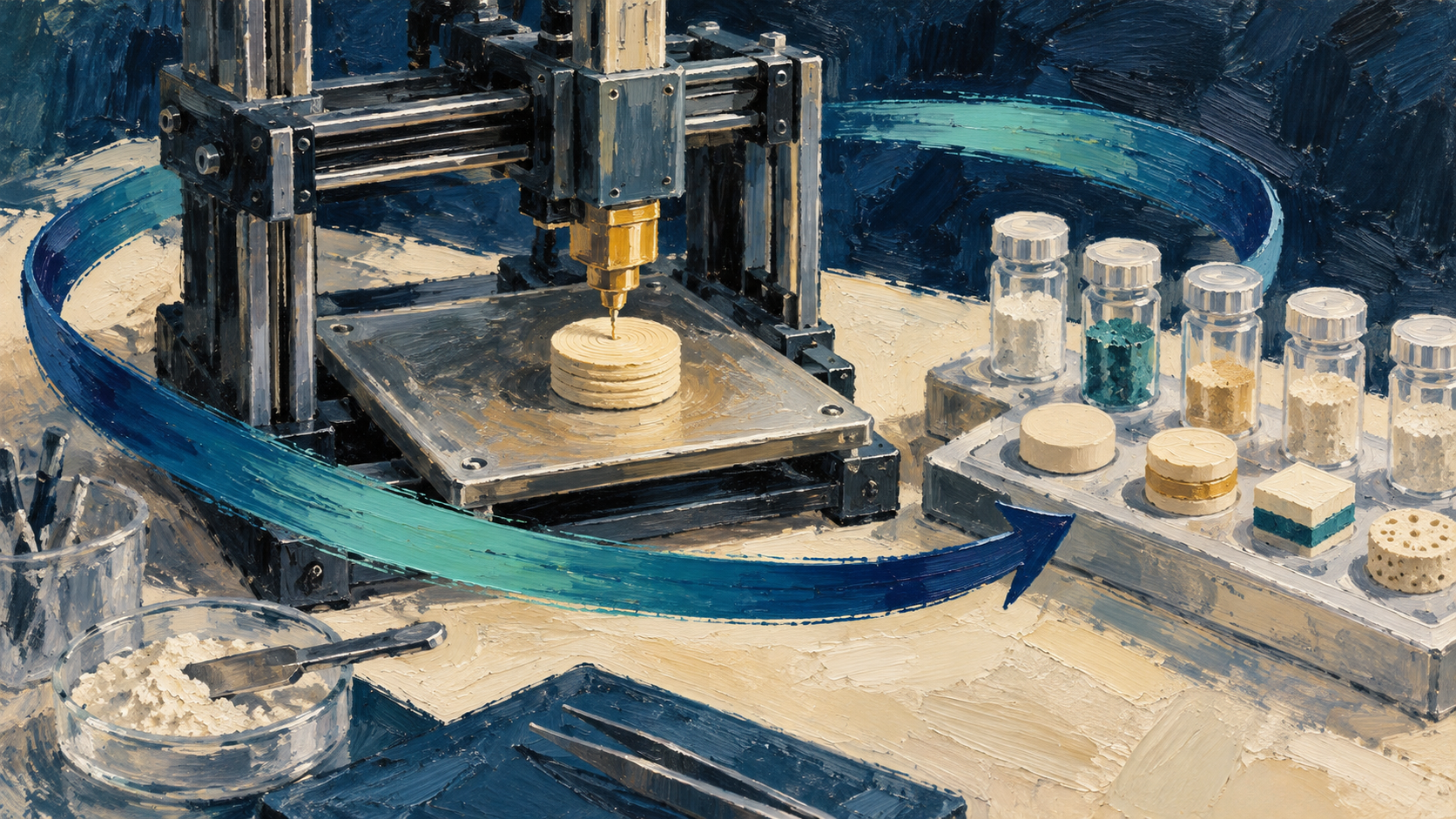
The federal project description proposes a closed loop in which predictive models and experimental results inform further work. That connection is central to the “self-driving” concept. Automated equipment carries out experiments, while the results help guide subsequent decisions.
The planned research spans the search for therapeutic candidates, including small molecules and biologics; the design of micro- and nanomedicine delivery systems; and the use of AI with 3D printing and bioprinting to develop personalized dosage forms and manufacturing processes.
The university reports that Maniruzzaman’s lab already has 3D printers and robotic biofabrication equipment. Students have also added cameras and remote monitoring to a printer. Connecting these technologies into a coordinated system is the next task, with engineers and researchers supervising the work at Insight Park.
A workforce question for Mississippi
Workforce development is an explicit expected outcome in the federal description. Trainees and researchers are intended to gain experience in AI-driven pharmaceutical science.
For MAIN’s education and workforce audience, the project offers a useful way to examine the skills between a model and a working instrument. A prediction must become an experiment, and its measurement must return in a form the software can use. Educators considering related instruction can use those connections to discuss data quality, instrument integration and the scientific judgment needed to evaluate automated decisions.
MAIN’s recent coverage of a regional research-computing consortium described plans to share computing capacity, with Ole Miss and Mississippi State among the founding institutions. The lab plan adds a separate example of AI research infrastructure within Mississippi, focused on connecting computation to pharmaceutical experiments.
What the award establishes
The U.S. Department of Health and Human Services record identifies a $7 million Health Resources and Services Administration award dated September 22, 2026. Its performance period runs from September 30, 2026, through September 29, 2029. The university describes a two-year goal for integrating existing technologies.
The sources establish funding and a development plan. They do not report a completed autonomous facility or a measured reduction in the time required to bring a new medicine to patients. The FDA’s drug-development overview describes safety testing, clinical research and regulatory review beyond laboratory discovery.
For readers following the project, the next useful evidence will be which experimental workflows the integrated system can perform and how researchers assess their reliability. Those details will help distinguish the funded objectives from demonstrated capability.
Sources and reporting
This source-based MAIN report draws on the university announcement and the federal award description, adding analysis for Mississippi’s education and workforce audience. MAIN did not interview the research team or visit the lab.
- Ole Miss report on the planned self-driving lab, by Clara Turnage, October 12, 2026.
- HHS award CE1HS60190 and project description, including the September 22, 2026 award action.
- FDA overview of the drug-development process.