
Published July 22, 2026 at 7:00 p.m. CT by the Mississippi Artificial Intelligence Network.
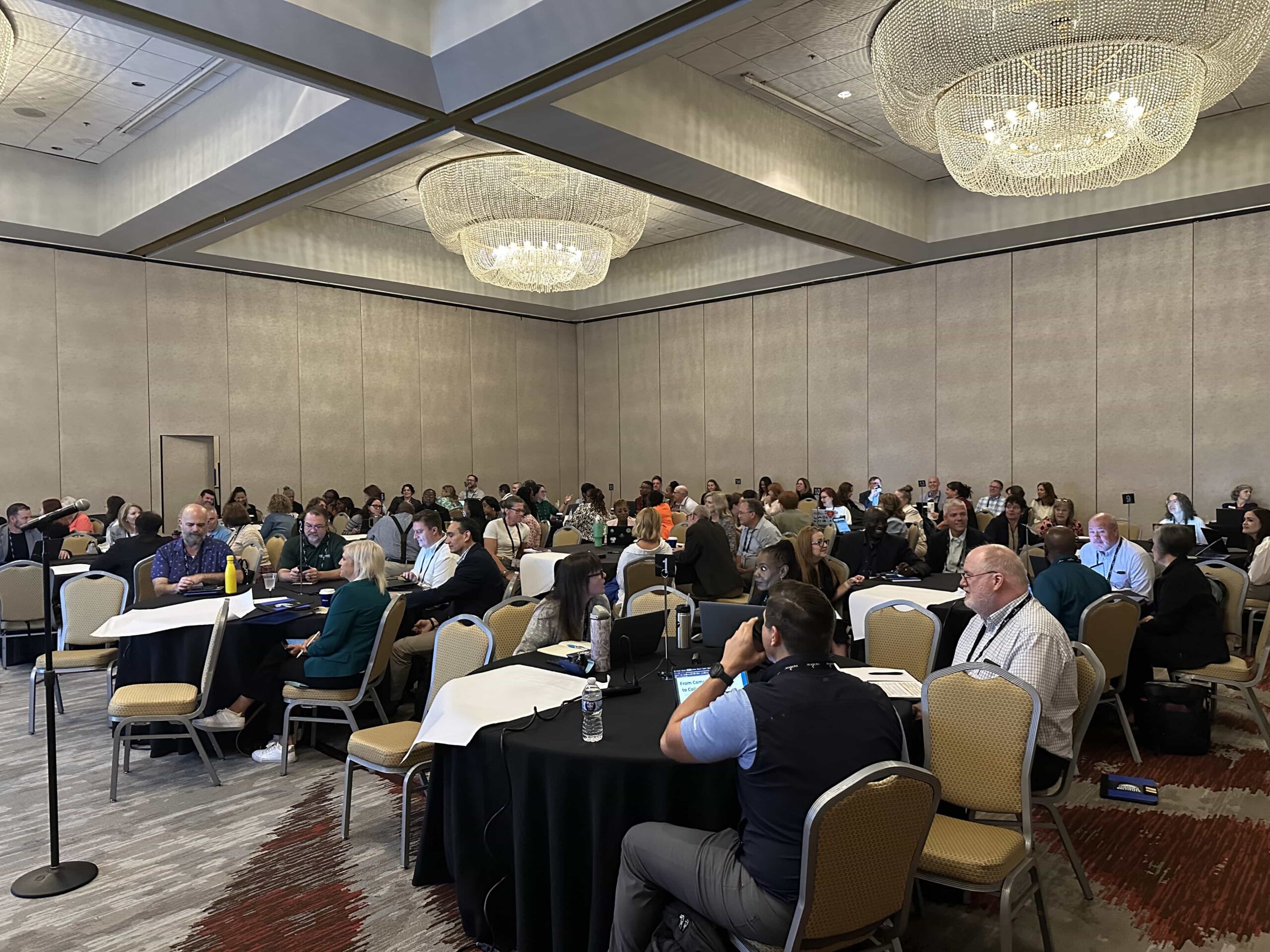
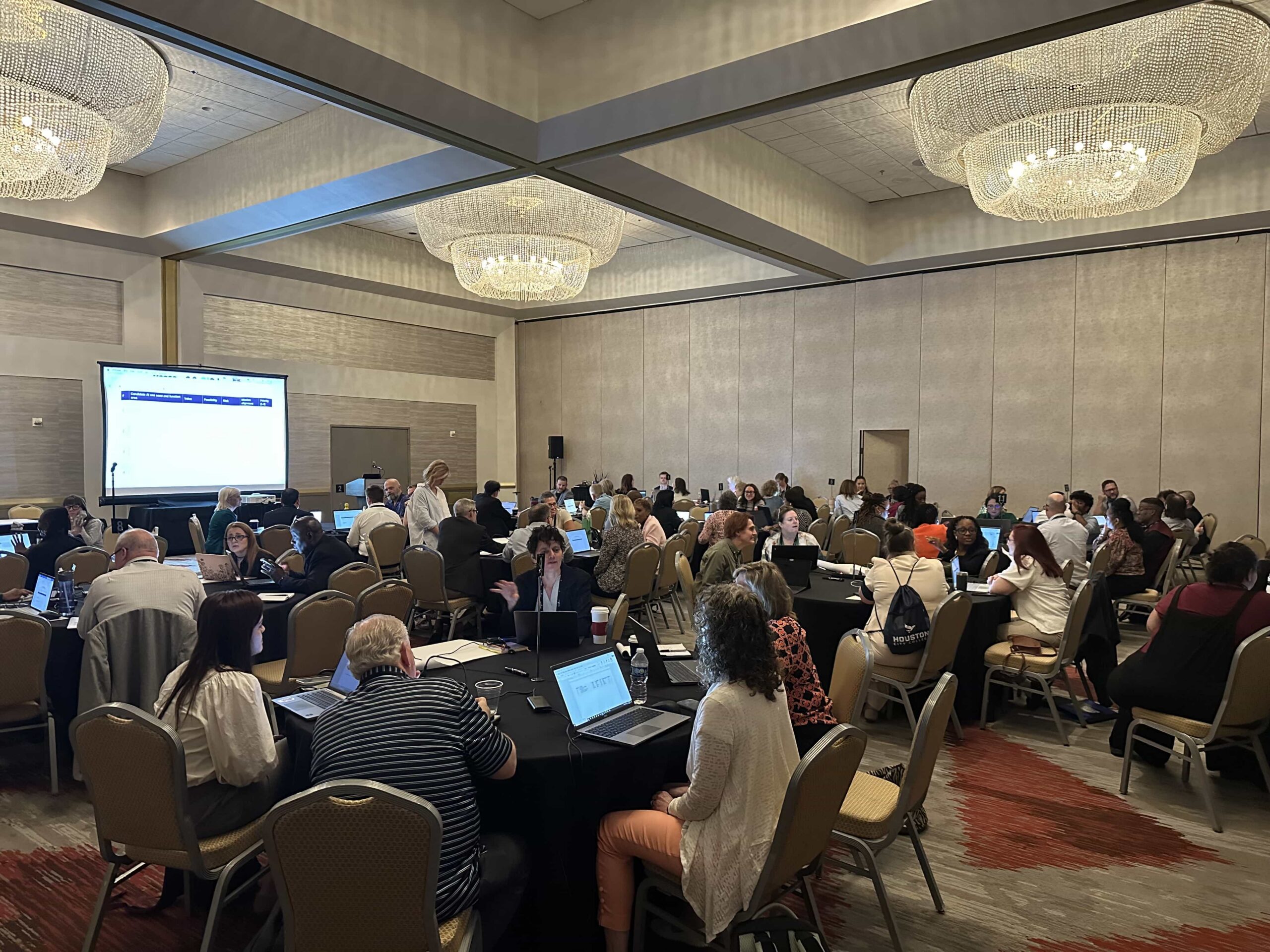
ATLANTA – Dr. Kollin Napier, Chief Artificial Intelligence Officer for the Mississippi Artificial Intelligence Network (MAIN), led a SACSCOC Summer Institute AI session on July 20 and 21, 2026. The two three-hour sessions helped higher education leaders move from broad AI interest to campus-specific decisions.
The session, Implementing AI Across the Institution: Practical Strategies for Adoption, Capacity Building, and Campus Implementation, took place at the Hilton Atlanta. More than 150 leaders joined the first morning, and a new group took part on the second day. Across the two days, nearly 300 higher education professionals registered, representing more than 165 institutions. The rooms included presidents, provosts, deans, and institutional effectiveness and accreditation professionals from colleges and universities.

SACSCOC Summer Institute AI session: key details
- What: An applied session on choosing, governing, and implementing campus AI use cases.
- When: July 20 and 21, 2026, from 9 a.m. to noon each day.
- Where: The 2026 Southern Association of Colleges and Schools Commission on Colleges Summer Institute at the Hilton Atlanta.
- Who: Dr. Kollin Napier of MAIN and higher education leaders from community colleges, technical colleges, and universities.
- Why it matters: Institutions need a practical way to compare AI opportunities, manage risk, and connect each project to mission.
A working method for campus AI priorities
First, table groups identified possible AI uses for their institutions. Then, they considered each idea through four criteria: value, feasibility, risk, and mission alignment. The groups posted their leading ideas so the full room could compare patterns.
Next, participants assessed institutional readiness across seven dimensions. They also mapped the stakeholders needed to move an initiative forward. Finally, each participant developed a one-page implementation plan with a practical action for the next 30 days.
“AI adoption is an institutional leadership challenge before it is a technology challenge,” Napier wrote in his Day 1 recap.
Two rooms produced 135 campus AI use cases
MAIN’s combined review covered 135 use-case entries from 36 table groups. The July 20 room produced 86 entries from 22 groups. The July 21 room produced 49 entries from 14 reported groups, although the analysis captured 13 of the 14 Day 2 posters.
The same method also revealed different local priorities. On Day 1, assessment, accreditation, and outcomes led with 19 entries. On Day 2, student success and services led with nine. Therefore, the process did not force one standard answer. Instead, it helped each room surface its own needs.
Assessment and analytics led the combined portfolio
Across both days, the ideas clustered around core institutional work. The largest combined themes were:
- Assessment, accreditation, and outcomes: 26 entries.
- Data, analytics, and strategic planning: 24 entries.
- Administrative operations and automation: 21 entries.
- Teaching, learning, and faculty enablement: 19 entries.
- Student success and services: 17 entries.
- Governance, policy, and institutional readiness: 14 entries.
- Communication, chatbots, and knowledge access: 14 entries.
The two largest themes accounted for 37% of all entries. Moreover, every theme appeared on both days. That spread supports a balanced pilot portfolio instead of one large enterprise bet.
High perceived value came with real implementation risk
Participants rated 73 entries for value, and 62 of those ratings were High. That equals 85% of the scored entries. However, the risk results point to the need for strong controls. Of 68 entries with a risk rating, 48 – or 71% – were Medium or High.
The evidence also has limits. Only 58 of the 135 entries received all four ratings. In addition, tables used different rating and priority notations. The findings show direction, but they are not yet de-duplicated business cases or funding decisions.
Still, six Day 2 entries already matched the strongest first-move profile: High value, High feasibility, Low risk, and High mission alignment. Those ideas covered accreditation support, human resources, dashboards, chatbots, transfer review, and survey development.
A balanced, governed pilot portfolio
The combined analysis points to four practical pilot lanes: mission assurance, decision intelligence, service and operations, and learning and support. For example, a mission-assurance pilot could support program review or evidence compilation. An operations pilot could focus on a bounded workflow with a clear service baseline.
Before investment, MAIN’s review recommends a common second scoring pass. Institutions should de-duplicate related ideas, name accountable sponsors, define approved data paths, and document human review. They should also set a measurable baseline and a stop condition for every pilot.
From there, leaders can shortlist eight to 10 candidates and select two or three 90-day pilots. At least one should support mission assurance. Another should address operations or decision intelligence. This approach keeps human judgment, institutional mission, and accountability at the center.
Continue the work with MAIN
MAIN provides the session worksheets, readiness assessment, implementation-plan template, and presentation materials on its SACSCOC session resource page. Higher education teams can also explore MAIN’s free AI courses and adaptable AI policy guides.
SACSCOC Summer Institute AI session: frequently asked questions
What was Dr. Napier’s SACSCOC session about?
The session helped higher education leaders prioritize AI use cases, assess institutional readiness, engage stakeholders, and build a one-page campus implementation plan.
When and where did the sessions take place?
Dr. Napier led the sessions from 9 a.m. to noon on July 20 and 21, 2026, at the Hilton Atlanta during the SACSCOC Summer Institute.
What did participants identify?
The two rooms produced 135 use-case entries. Assessment, accreditation, and outcomes led the combined portfolio with 26 entries, followed by data, analytics, and strategic planning with 24.
What should institutions do next?
Institutions should normalize the scores, de-duplicate similar ideas, assign sponsors, and select a small set of governed 90-day pilots with human review and measurable outcomes.