
News · Published · By Mississippi Artificial Intelligence Network (MAIN)
BILOXI, Miss. Mississippi Gulf Coast Community College held AI in Manufacturing Day on September 18, bringing university researchers, workforce leaders, AI practitioners and manufacturers together at the college’s Hospitality & Resort Management Center for a full-day program on industrial AI.
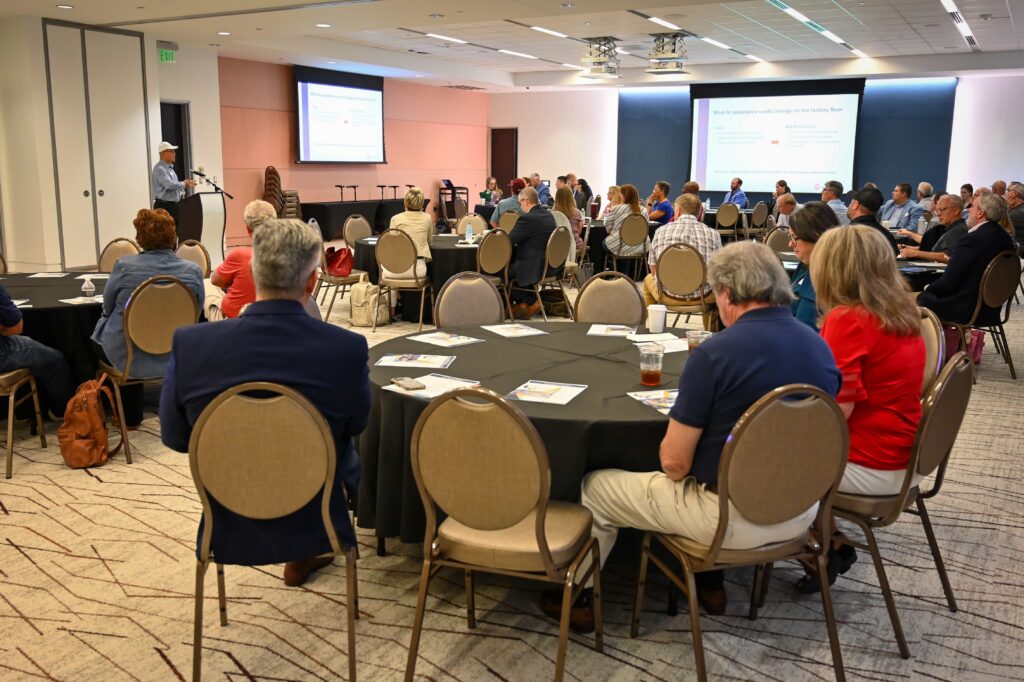
The program moved from research on autonomous systems, industrial robotics and resilient energy to an applied workshop led by MGCCC’s Advancements in Manufacturing Upskilling program, known as AiM UP, and the Mississippi Artificial Intelligence Network. The afternoon’s final major session was a panel on moving AI from potential to production.
Research connects autonomy, robotics and resilient systems
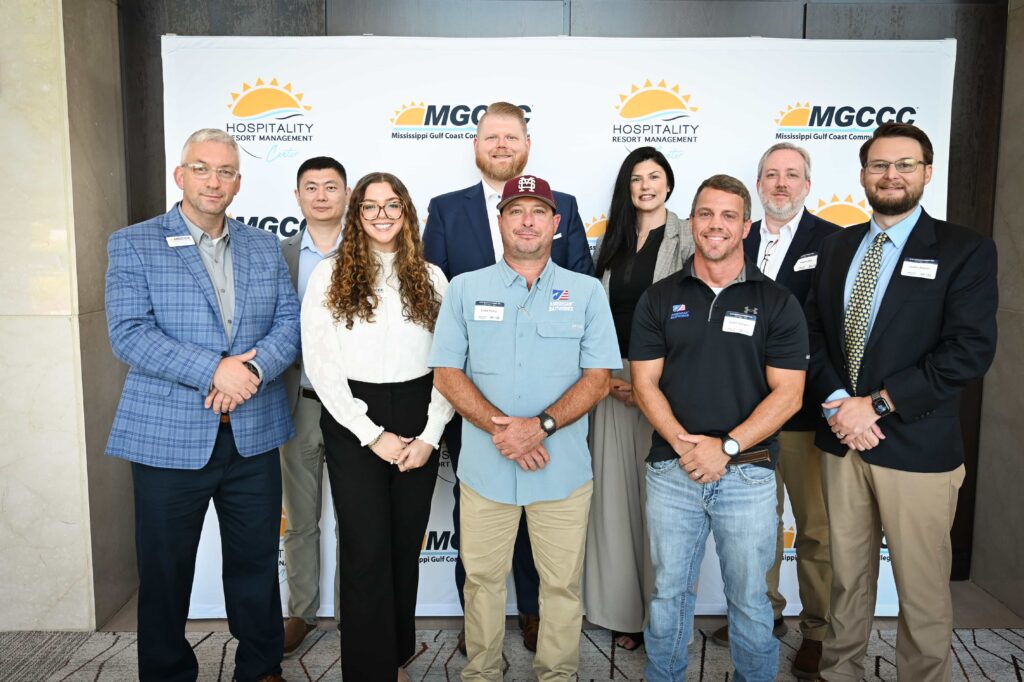
Mary Mederos, MGCCC advanced manufacturing developer, welcomed participants. Dr. Erin Riggins, vice president of the college’s Harrison County Campus, delivered opening remarks before three research and innovation sessions.
Gang Li, an assistant professor in Mississippi State University’s Michael W. Hall School of Mechanical Engineering and assistant director of the DOE Industrial Training and Assessment Center, presented Physical AI & Autonomy for Manufacturing Resiliency.
Dr. Xiaopeng Zhao, professor and chair of mechanical engineering at the University of Mississippi, followed with Trustworthy AI for Industrial Robotics: From Natural-Language Interaction to Human-Gated Autonomy. His session placed human approval directly in the title of the industrial robotics discussion.
Doha Bounaim, a doctoral student in Mississippi State’s Michael W. Hall School of Mechanical Engineering, presented research on forecasting wind intermittency for energy allocation between grid delivery and hydrogen generation.
Together, the three sessions put equipment autonomy, human oversight and energy reliability on the same manufacturing agenda. They also gave the day’s later workshop and panel a research base for discussing applied systems.
AiM UP and MAIN move the program into applied work
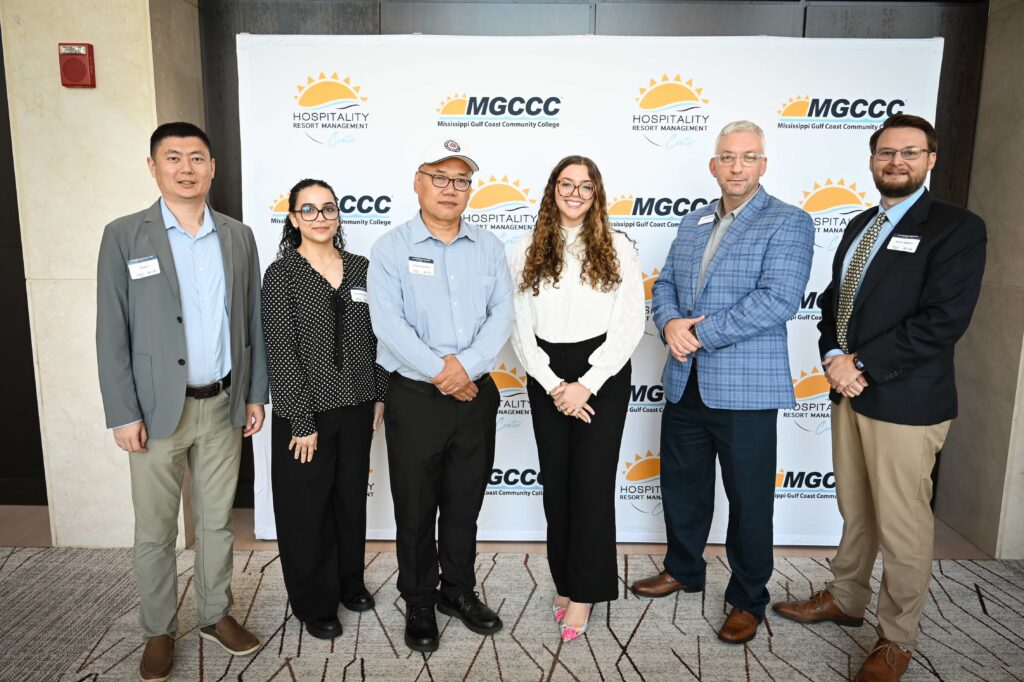
The late-morning session paired an overview of AiM UP with an introduction to MAIN and a manufacturing demonstration. Dr. Kollin Napier, MAIN’s chief artificial intelligence officer, introduced the statewide initiative. Jefferson Reid, director of MGCCC’s AiM UP Center, presented the college’s advanced manufacturing training program.
MGCCC describes AiM UP as a partnership with AccelerateMS and Mississippi State University that prepares learners to work with advanced and automated manufacturing technologies. Its training environment includes robotic CNC machining, programmable logic controls, automated material handling, additive manufacturing, autonomous mobile robots, collaborative robotics and scanning systems.
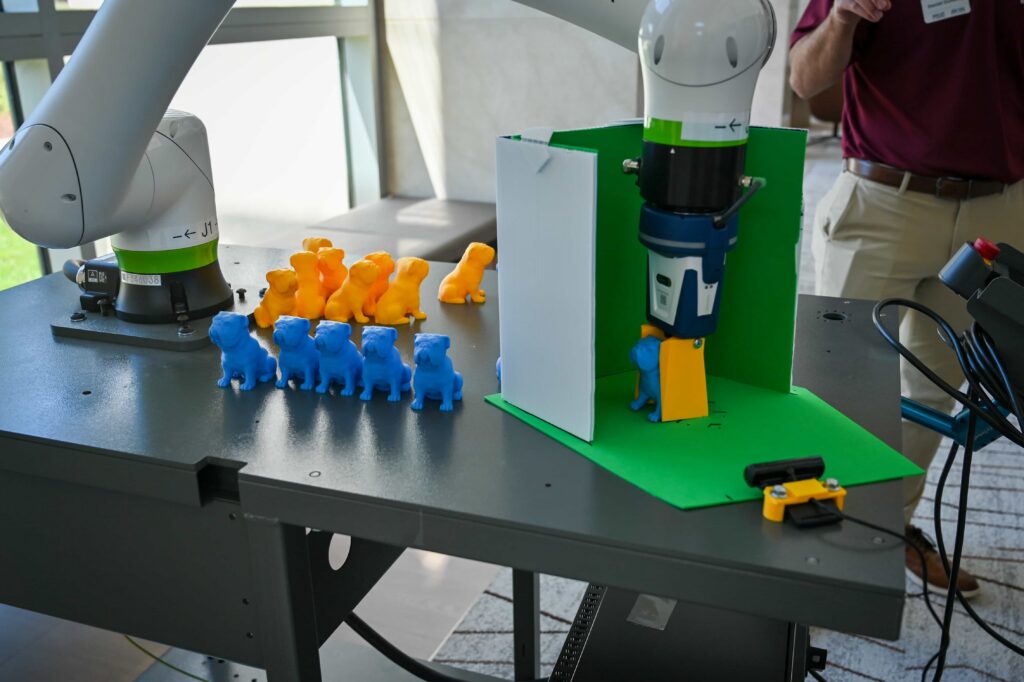
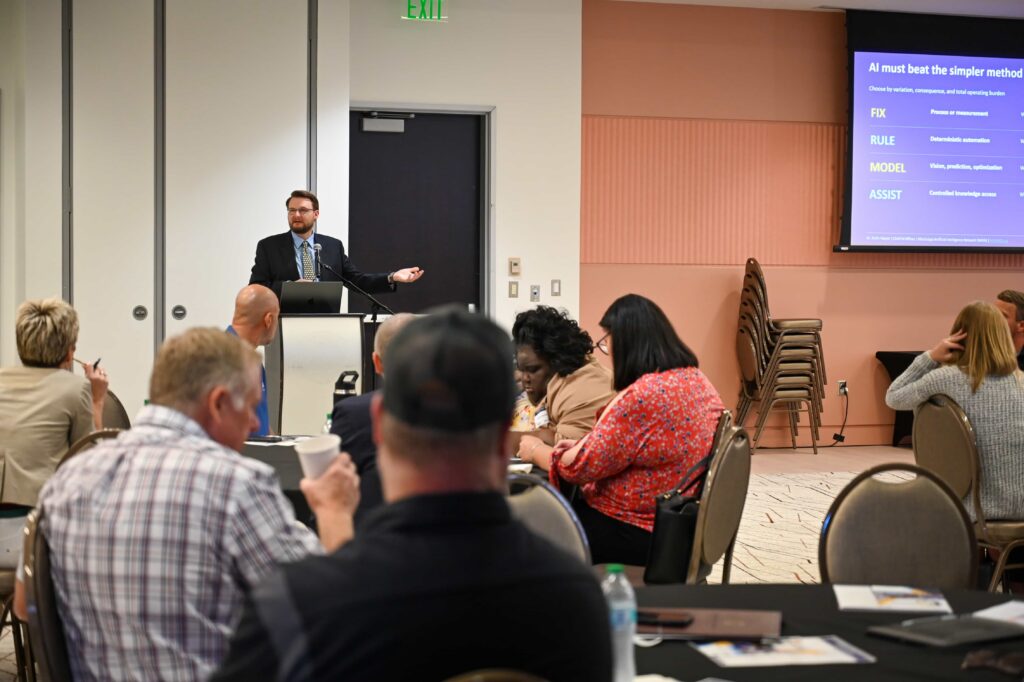
Wayne Francis, AI strategist for MAIN, then demonstrated vision-language-model-based quality control in automated manufacturing. The demonstration placed a specific production use case beside the morning’s broader discussions of reliability, autonomy and workforce preparation.
Napier returned as the featured lunch speaker for From Possibility to Practice: Making AI Work in Manufacturing, extending the program’s focus from technical capability to implementation.
Plant, workforce and research perspectives meet in the afternoon panel
The final major session, From Potential to Production: AI in Manufacturing, brought plant operations, workforce development and university research into one discussion. Ross Smith of Mississippi State University moderated the panel. Smith directs the Innovation, Design, & Engineering Education Laboratory and serves as an assistant director of the Mississippi State Industrial Training and Assessment Center.
Panelists included Rachael Kunz, MGCCC associate vice president of Workforce Solutions; Travis Hill, associate director of Mississippi State’s Center for Advanced Vehicular Systems Extension; Li; Ladd Flurry, plant engineer at American Baitworks Co.; and Justin Saegert, advanced manufacturing manager at American Baitworks Co.
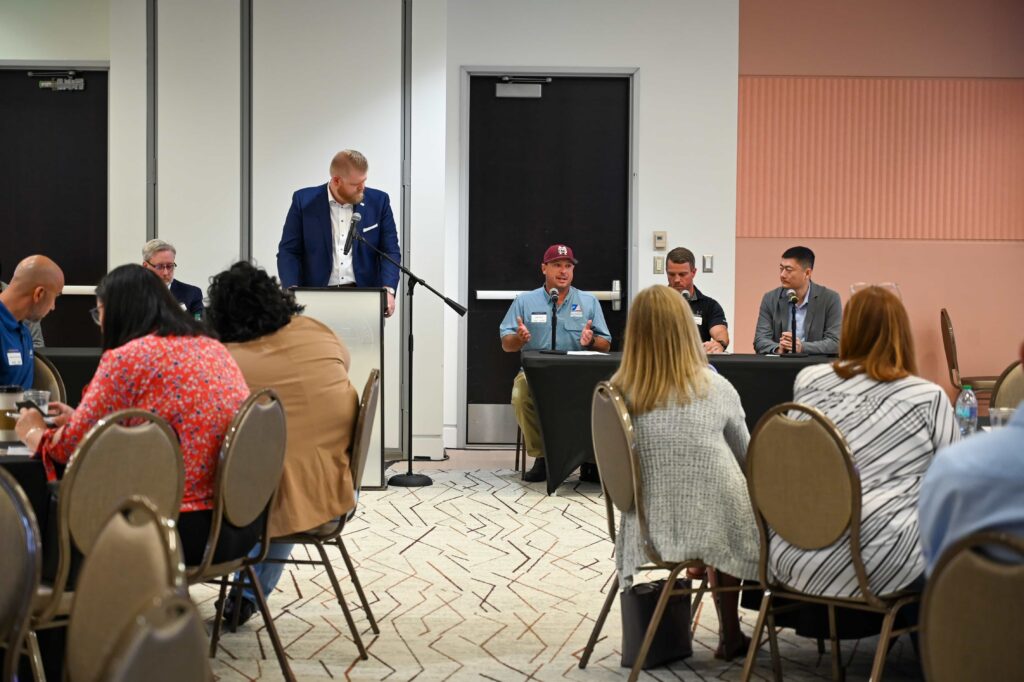
The panel’s roster covered research, workforce training, vehicle systems, plant engineering and advanced manufacturing management. It joined university and college perspectives with two roles responsible for work inside a manufacturing company.
Mederos closed the program after the panel.
Continue with manufacturing training and implementation resources
Manufacturers and learners can review MGCCC’s AiM UP program for information about its advanced manufacturing training environment and contact the AiM UP Center through the college’s program page.
Teams evaluating an AI use case can also use MAIN’s Manufacturing AI Playbook. The playbook guides a manufacturer through selecting one bounded workflow, setting data and tool rules, assigning an accountable owner, requiring qualified human review and recording evidence before deciding whether to continue, revise, pause or stop a pilot.