
Published July 15, 2026 at 6:00 p.m. CT by the Mississippi Artificial Intelligence Network.
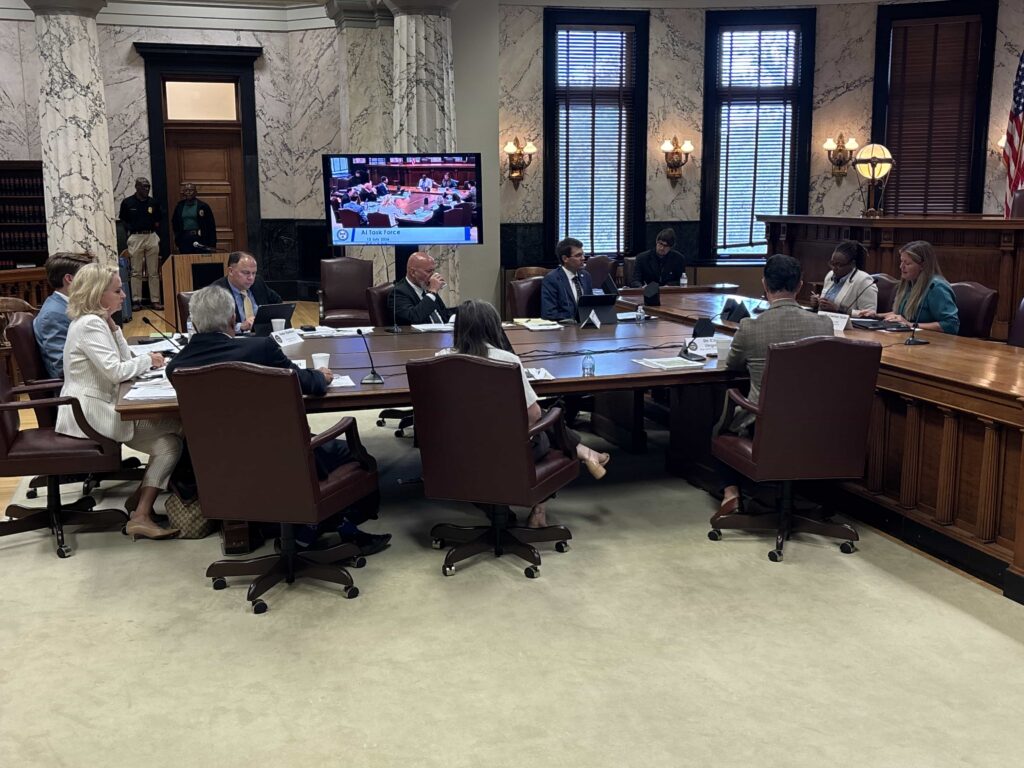
JACKSON, Miss. The Mississippi Artificial Intelligence Regulation (AIR) Task Force met July 13 and 14, 2026, in Room 216 of the State Capitol for two days of data center hearings. Across seven panels, 20 speakers addressed the questions Mississippians raise most often about data centers. Those questions include electricity rates, water use, local decision-making, and jobs.
The Legislature passed Senate Bill 2426 in the 2025 Regular Session to create the task force, and the Mississippi Legislature publishes the full text. The law directs the task force to study artificial intelligence applications, risks, and state-government use. It also directs the task force to report to the Legislature each year.
Dr. Kollin Napier, Director of the Mississippi Artificial Intelligence Network (MAIN), is one of the seven voting members. He presided over both days because Senate Co-Chair Sen. Bart Williams was absent. House Co-Chair Rep. Jill Ford opened the hearings. SB 2426 also assigns voting seats to the legislative co-chairs and to the Department of Information Technology Services, the Office of Homeland Security, the Mississippi National Guard, and the Attorney General’s office. Ex-officio members serve in an advisory role.
Watch the full data center hearings
The Mississippi Legislature recorded both days of testimony. Watch the complete hearings below or open the recordings directly on YouTube.
Day 1: July 13, 2026
Watch the July 13 hearing on YouTube.
Day 2: July 14, 2026
Watch the July 14 hearing on YouTube.
Consistent questions across panels
The task force set out to listen and gather facts before making recommendations. Napier asked specific questions of individual witnesses throughout the hearings. At the end of each session, he also asked all witnesses and panelists one of two recurring questions so their answers could be compared across panels.
First, he asked panels to name the single most important action the task force should recommend on data center development. Witnesses could name an action to take or one to avoid. Second, he asked them to look five years out and identify the outcome that would show Mississippians whether the development had served them.
The task force took no position over the two days. Instead, its aim was to put facts, commitments, and recommendations on the public record. The task force, the Legislature, and the public can then weigh them.
A range of views at the data center hearings
Perspectives varied and often conflicted. Even so, speakers on different sides pointed to the same gap in current law. The gap involves behind-the-meter power generation, meaning electricity a facility produces on-site that never enters the public utility system, and several speakers said the Legislature may need to address it.
Utility and industry representatives described their infrastructure commitments and contractual protections, and they disputed claims that data center development is raising residential electricity rates. Data center representatives challenged claims that their projects would strain local water supplies. Community and public-interest witnesses raised concerns about noise, air quality, transparency, and accountability near operating facilities.
These remarks were testimony. The task force neither resolved the competing figures nor adopted findings during the hearings.
What comes next
The task force will weigh the testimony from the two days of data center hearings as it prepares recommendations. Under SB 2426, it reports to the Legislature by December 1 each year, and it dissolves on December 31, 2027. Its first report, issued in January 2026, covers its 2025 work.
MAIN took part as a fact-focused voting member. Its work statewide centers on practical AI literacy, workforce readiness, and responsible AI use for Mississippians.