
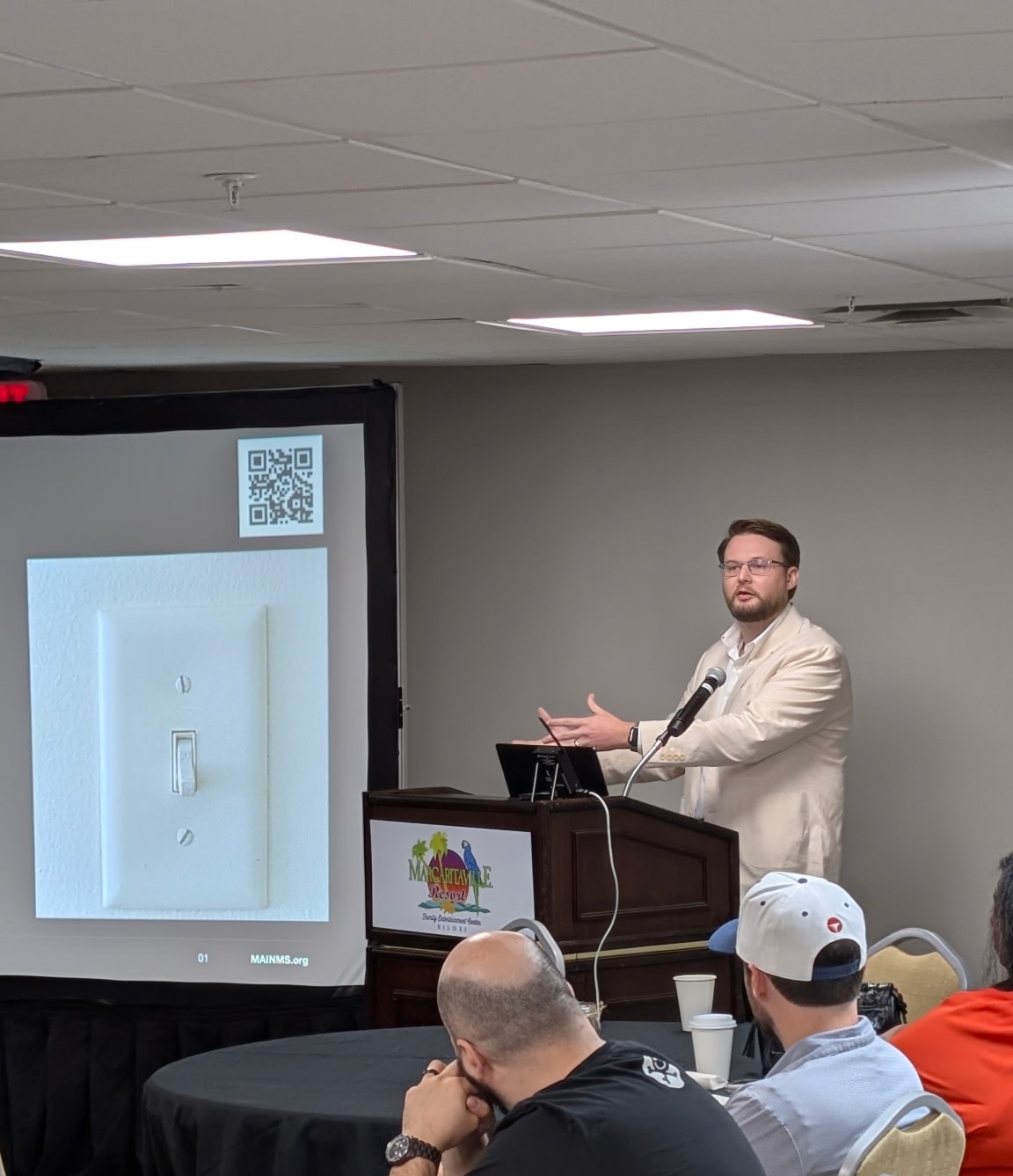
Dr. Kollin Napier, Chief Artificial Intelligence Officer for the Mississippi Artificial Intelligence Network (MAIN), opened the Mississippi Technology User Group (MSTUG) Fall Summit’s Saturday program on September 26, 2026, in Biloxi. The session, “From Policy to Practice: Responsible AI Adoption in Mississippi,” focused on the technology professionals who will set up, secure, and support AI across state agencies, local government, and public education.
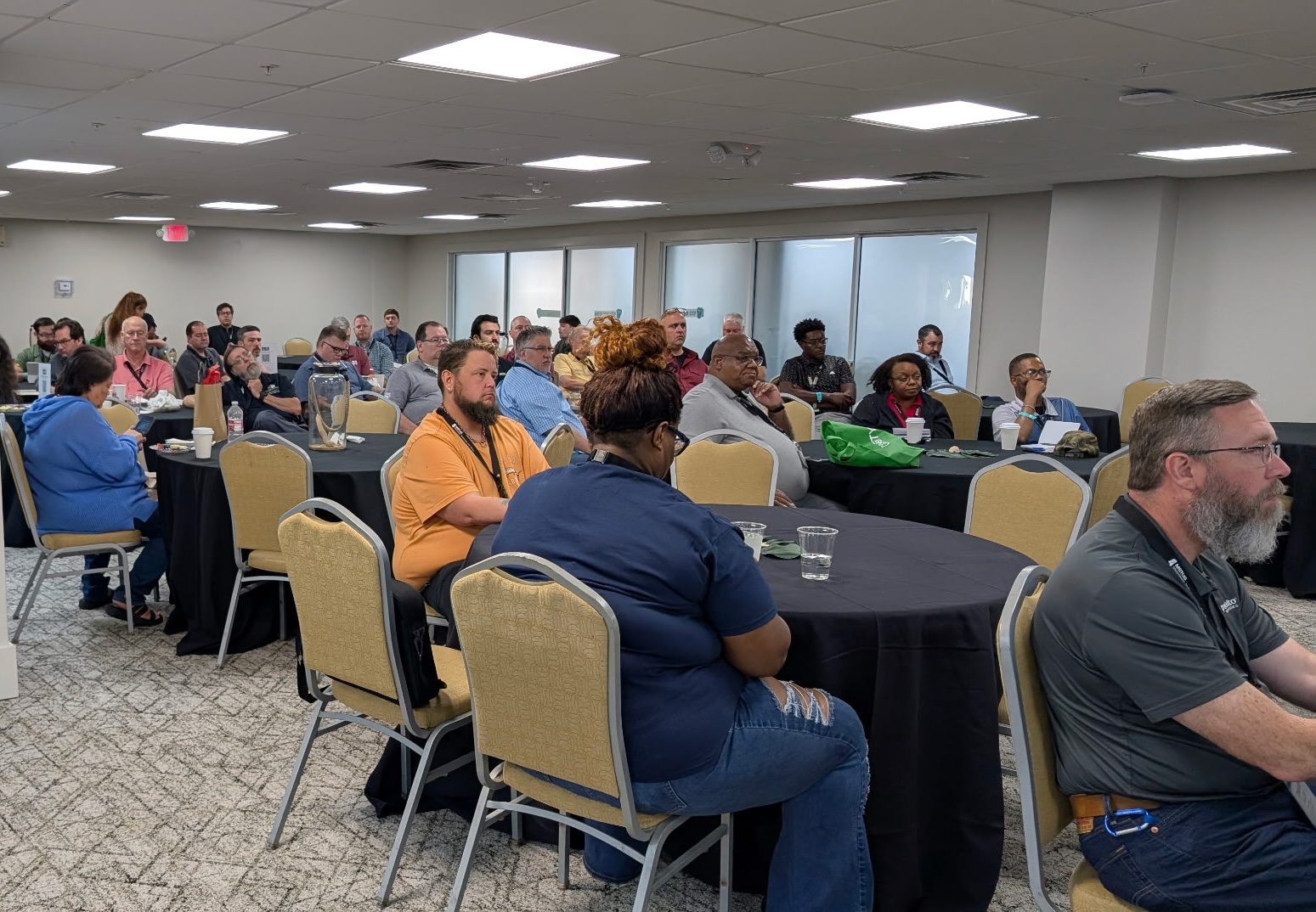
MSTUG asked for a practical orientation to Mississippi’s AI policies and resources, with steps members could use when they returned to work. The brief emphasized smaller agencies with limited budgets and staff, alongside questions about governance, security, vendor claims, and workforce readiness.
A light switch on the opening slide introduced the session’s central scenario: a department wants an AI assistant enabled in software the organization already owns. Turning on the feature may take a moment. Deciding what it may read, who checks its answers, and who maintains the service requires a more deliberate process.
What needs to happen before the switch is turned on
The presentation followed a hypothetical request to activate an assistant by Friday so staff could search a shared drive and ask questions. The proposed pilot narrowed that request to a named collection of approved public instructions, with personnel files and resident records excluded.
The examples examined both permissions and accuracy. An access test used synthetic restricted information to check whether an assistant might expose content through an answer, excerpt, or citation. A separate example showed why a working citation is insufficient: an answer can point to a superseded document and still give the wrong instruction.
A decision exercise presented a pilot limited to public documents that passed an access test but still cited outdated instructions. No one owned the update process. The exercise asked participants to identify a condition that needed to change before release, connecting technical testing to the people responsible for maintaining the information.
Vendor review extended beyond a demonstration. The presentation outlined questions about data storage and training use, identity controls, retention, model changes, and the ability to pause or exit a service. Support planning included how to correct a stale answer and retest the affected use before restoring access.
For small teams, the cost comparison also included human review. One illustrative calculation showed ten minutes saved in drafting offset by eight minutes of checking, leaving two minutes saved before licensing, administration, training, and support. These were teaching examples, not measured agency results.
Understanding Mississippi’s policy direction
The policy portion distinguished executive direction, agency rules, and legislative recommendations. Executive Order 1584 established state-agency AI inventory and policy work. The Mississippi Department of Information Technology Services AI Acceptable Use Policy, approved in November 2025, governs AI use within ITS and offers controls agencies can consider alongside their own requirements. Local governments and educational institutions must identify the authority and data obligations that apply to their settings.
The presentation also addressed the Artificial Intelligence Regulation Task Force’s Report One. Its recommended AI definition became law through House Bill 1723, effective July 1, 2026. The recommendation for disclosure when residents interact with public-facing conversational AI remained a recommendation, rather than a statewide mandate, in the session’s policy review.
Mississippi’s August 2026 Statewide AI Framework supplied a separate workforce perspective. The voluntary competency guide can help teams identify what reviewers, technical staff, and managers need to demonstrate. It does not approve a product or replace an employer’s rules.
Resources for the work after the summit
Dr. Napier connected those responsibilities to resources available through MAIN, Mississippi’s statewide AI initiative. At the time of the session, MAIN’s catalog listed 14 no-cost, online, self-paced AI courses, including options for practical tool use and sector-specific learning. The presentation materials also outlined planned October additions, including AI agents training; those plans were distinct from courses already available.
The Cybersecurity AI Playbook provides workflows and review checks for teams planning controlled AI use. MAIN’s policy guides include separate resources for state government, local government, K–12, and higher education. Teams can adapt them with their policy owners. The prompting guides provide task examples to use with approved information and human review.
A Mississippi example came from the AI Innovation Hub, which brings together Amazon Web Services, ITS, and MAIN. University of Southern Mississippi students presented an IT Support Assistant proof of concept for the Mississippi Development Authority at the Hub’s May 2026 showcase. The project explores staff support using approved documentation; its proof-of-concept status does not establish production readiness or measured savings.
The session’s suggested first-month sequence began with identifying existing AI use, including features embedded in current software. Teams would then define a permitted workflow and assign owners, run tests that record failures and review effort, and document a decision to release with conditions, revise, or stop. The sequence was a planning aid, not a state deadline.
The closing slide also previewed plans for The MAIN Event in April 2027. The exact date, venue, program, and registration details remain forthcoming.
MAIN thanks MSTUG for inviting Dr. Napier to open Saturday’s program and for shaping the session around the responsibilities of Mississippi’s government and education technology professionals.