
Dr. Kollin Napier walked pharmacists and pharmacy technicians through three fictional cases at the Academy of Managed Care Pharmacy’s Mid-South Day of Education on Nov. 12 in Birmingham, Alabama. His continuing education session, “AI in Healthcare: From Data to Decisions,” focused on what pharmacy teams need to verify before relying on AI for drug summaries, member letters or prior authorization review. Napier is chief artificial intelligence officer of the Mississippi Artificial Intelligence Network (MAIN), Mississippi’s statewide AI initiative. AMCP Mid-South
What a drug summary can leave out
Napier presented a sample metformin summary whose dosing statements matched the prescribing information. The draft omitted a safety check. The label calls for assessing kidney function before starting the medication and periodically afterward. A reviewer could verify every sentence in the draft and still miss the omission. Metformin prescribing information
A small 2026 study documented similar gaps. Researchers compared drafts from six freely available AI tools with three drug monographs prepared by pharmacists. Broad requests produced drafts that left out dosing and safety information. Asking for one section at a time improved the results, and the researchers still recommended pharmacist review. Journal of the American College of Clinical Pharmacy study
When AI output affects coverage
In the second exercise, Napier presented a mock letter that told a health plan member their request had been approved and their copay would be $25 through Dec. 31. The tool in the scenario had only the plan’s prior authorization policy. Staff would need to verify the approval, copay and date against the member’s actual coverage decision and benefits before sending a letter like that.
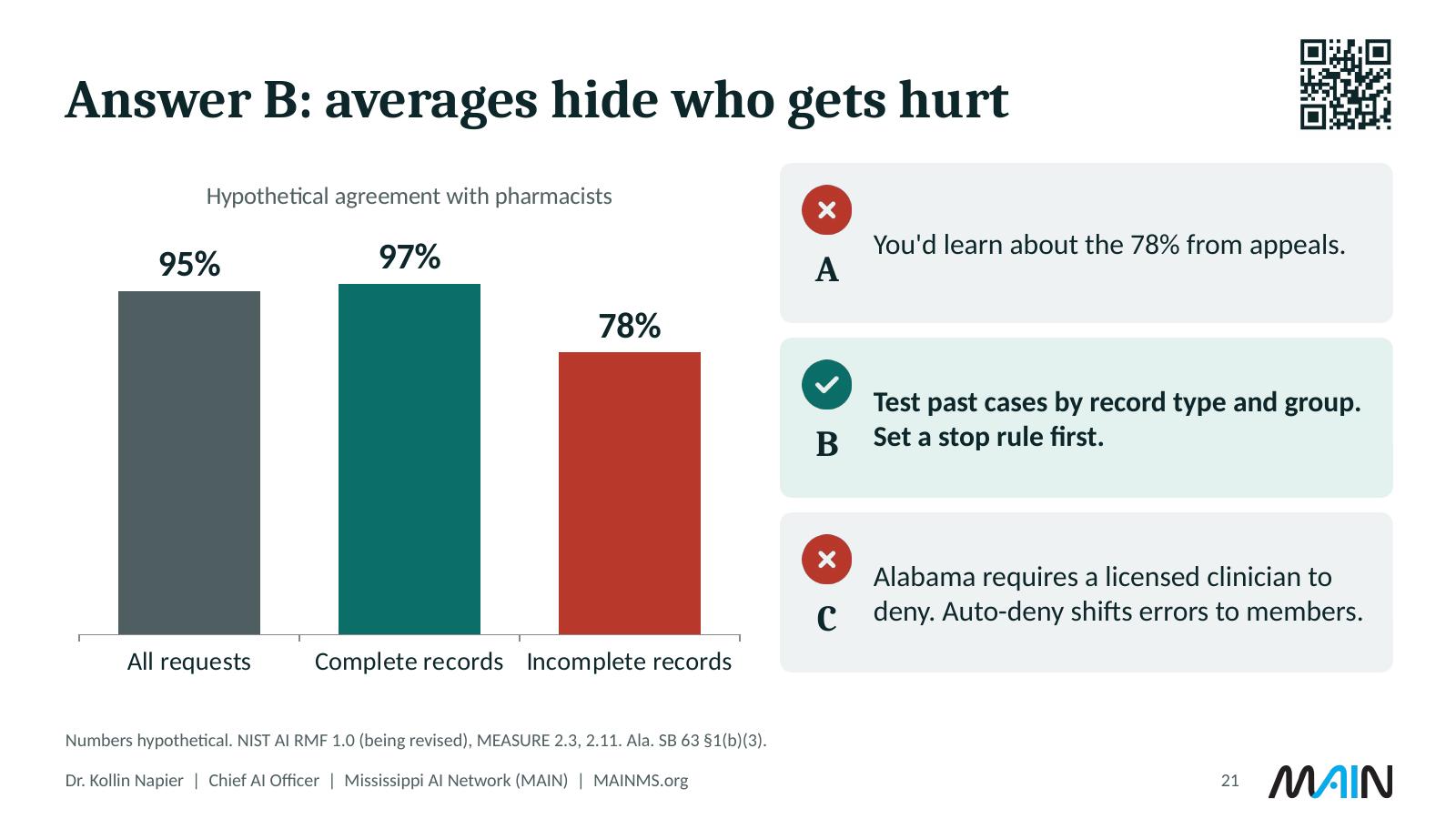
Napier then walked through a case involving a tool that sorted prior authorization requests. The hypothetical tool agreed with pharmacists on 95% of past requests overall. Agreement fell to 78% for requests with incomplete records. The exercise proposed testing the tool by record type and member group before rollout and deciding in advance what results would trigger a pause.
Alabama’s Senate Bill 63, which took effect Oct. 1, sets requirements for health benefit plan providers covered by the law. When a provider uses AI to determine whether a prior authorization request is medically necessary, it must consider the member’s medical history and individual clinical circumstances. A licensed physician or other qualified health care professional must make any decision to deny, delay or modify the request on medical necessity grounds. Alabama Senate Bill 63
A four-week test for pharmacy teams
Napier’s attendee handout proposed testing one task over four weeks. A pharmacist could use an approved tool to draft one section of a drug monograph and compare it with the reference. A pharmacy technician could draft a reusable letter template without patient information and have a pharmacist review it before use. Teams would log errors and omissions and count the time spent reviewing and correcting drafts before deciding whether to continue. MAIN’s healthcare AI policy template · MAIN’s healthcare prompting guide